Overview
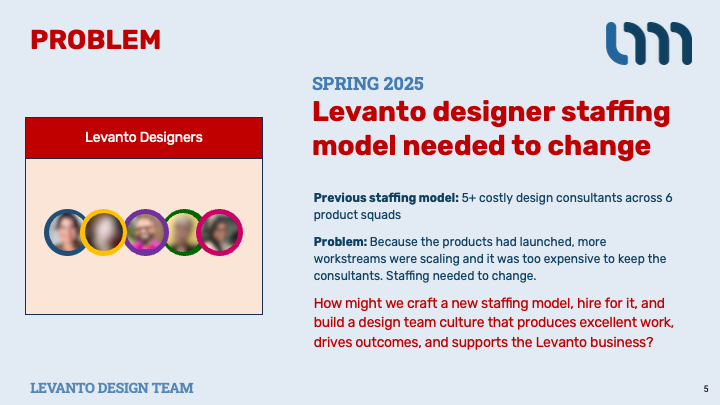
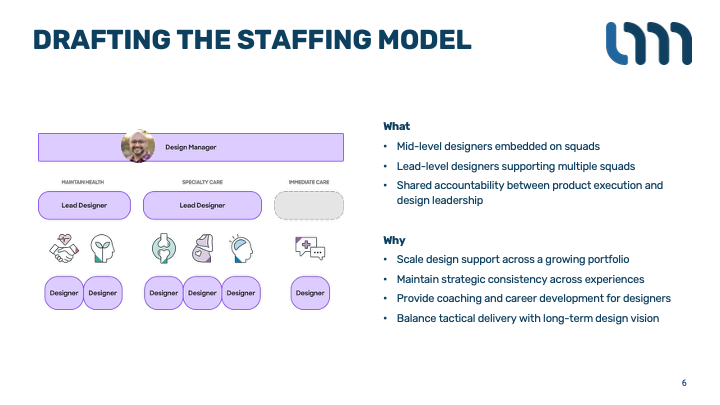
When I joined Baylor Scott & White Health, the product design organization was growing rapidly. Over the course of a year, our team expanded from a small group supporting a handful of products into a larger team responsible for a growing portfolio of experiences.
While hiring was important, the real challenge was creating the conditions for people to succeed together. I approached the problem the same way I would approach a product challenge: by intentionally designing the systems, rituals, and experiences to shape culture.
The Challenge
As the team grew, several risks emerged:
- New designers were joining with different backgrounds and expectations.
- Organizational values needed to translate into day-to-day behaviors.
- Team members needed clarity around how to collaborate, communicate, and give feedback.
- Rapid growth could easily lead to isolation, burnout, or inconsistent experiences.
How might we intentionally design a team culture that helps people feel connected, supported, and able to do their best work?
My Approach
Rather than treating culture as something that would emerge on its own, I focused on designing the employee experience across four key moments.
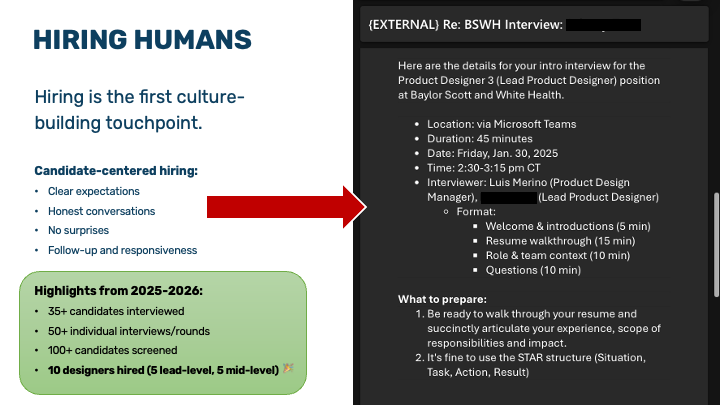
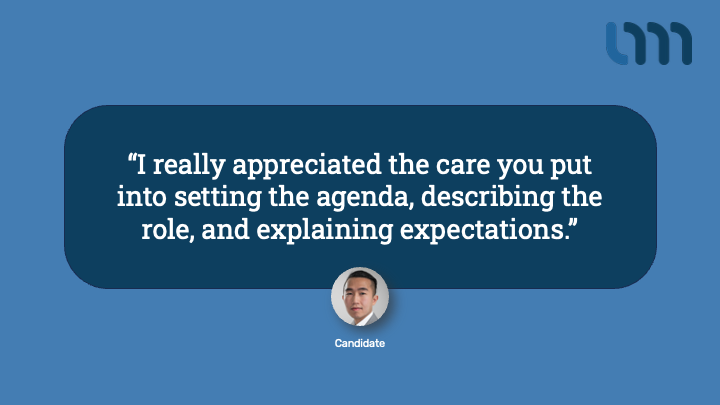
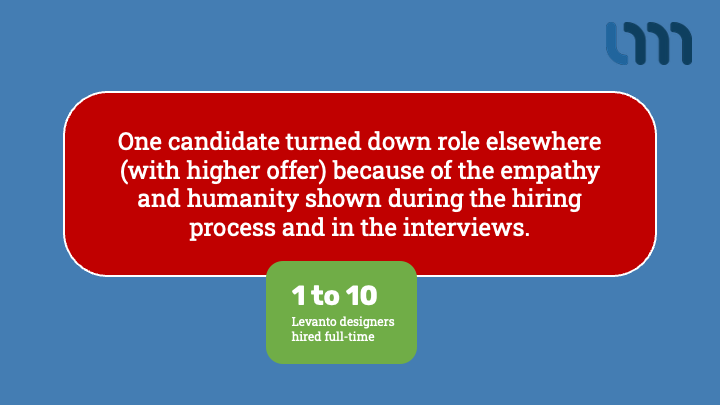
1. Design Trust Before Day One
Hiring wasn’t simply about evaluating candidates.
I aimed to create a transparent interview experience that clearly communicated:
- Expectations
- Team dynamics
- Ways of working
- Growth opportunities
The goal was alignment rather than persuasion.
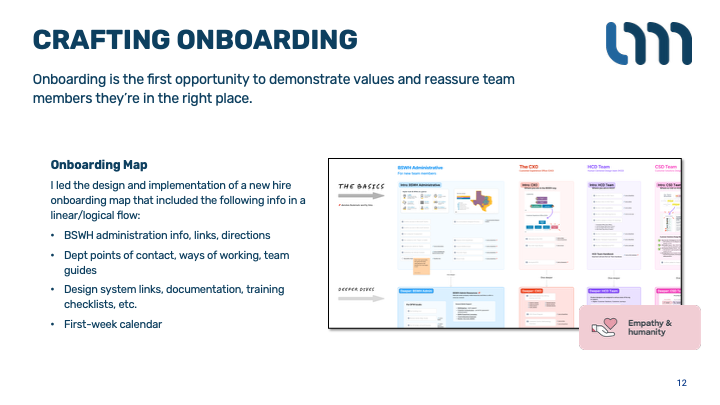
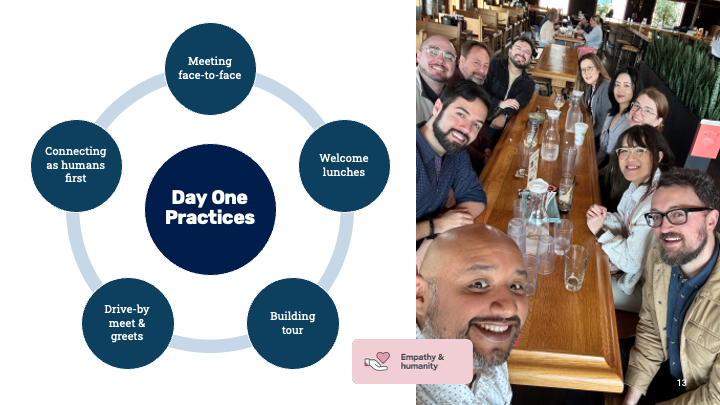
2. Build Human Connections Early
Onboarding focused as much on relationships as it did on process.
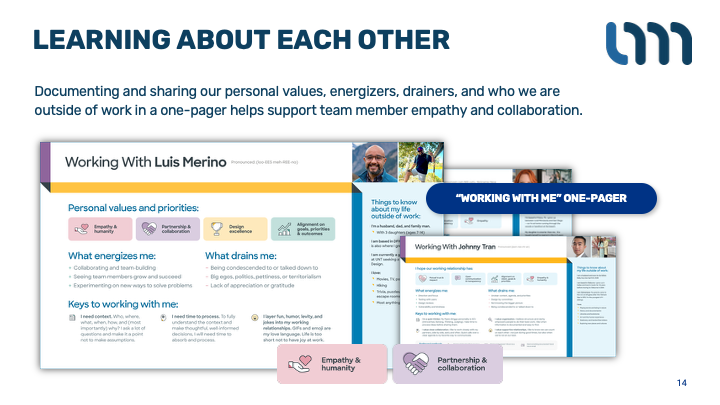
I spent intentional time getting to know each new designer as a person, understanding:
- Communication styles
- Motivations
- Career aspirations
- Preferred ways of working
To support this, team members created “Working With Me” guides that helped accelerate trust and collaboration.
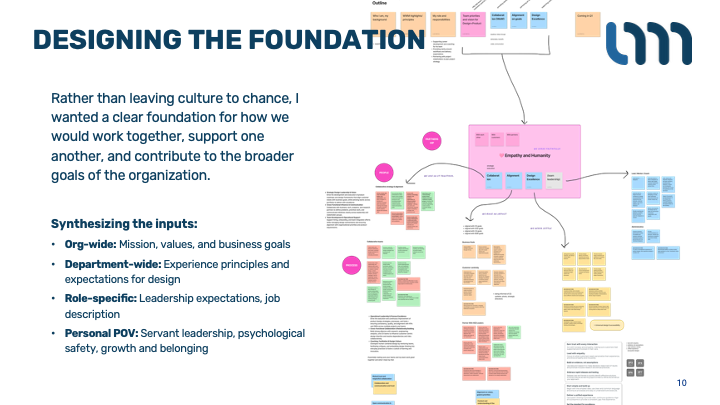
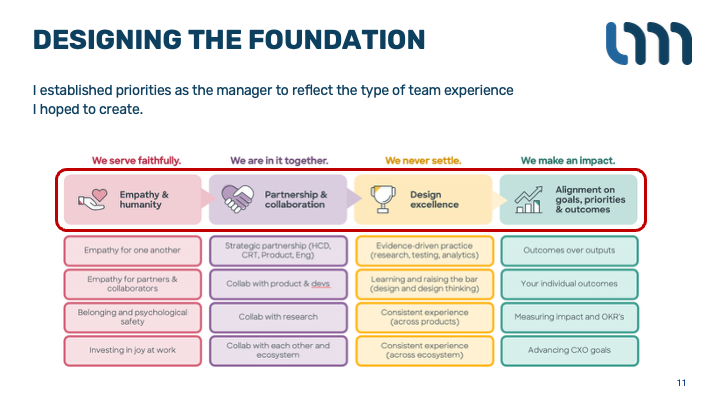
3. Create Shared Priorities
To provide clarity and consistency, I synthesized:
- Organizational values
- Department principles
- Team needs
- My leadership philosophy
Into a small set of team priorities that became the foundation for:
- Decision-making
- Collaboration
- Feedback
- Team rituals
These priorities helped connect everyday work back to larger organizational goals.
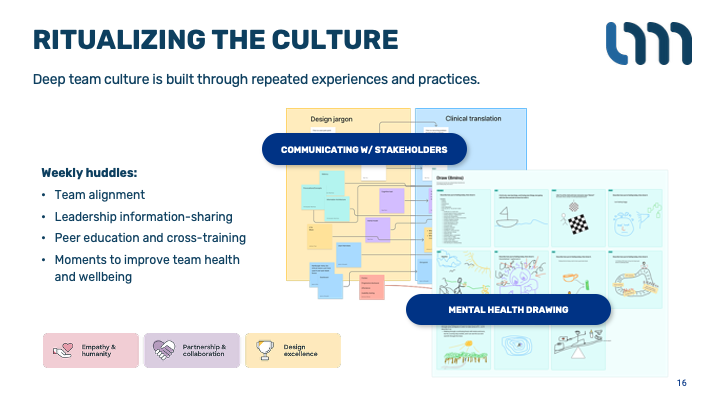
4. Reinforce Culture Through Rituals
Culture isn’t built through presentations.
It’s built through repeated experiences.
I intentionally shaped team rituals to reinforce connection and psychological safety, including:
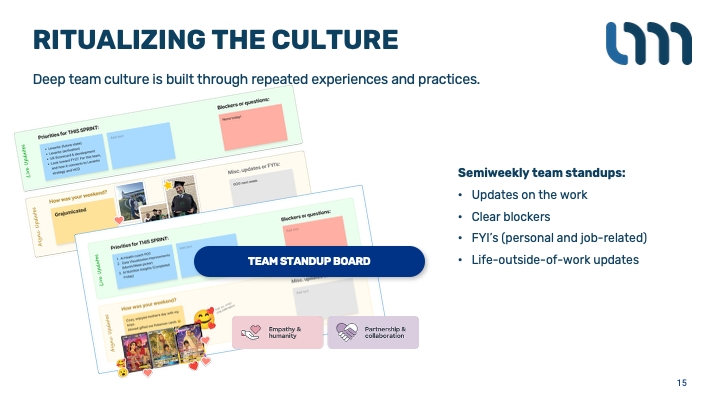
- Human-centered standups
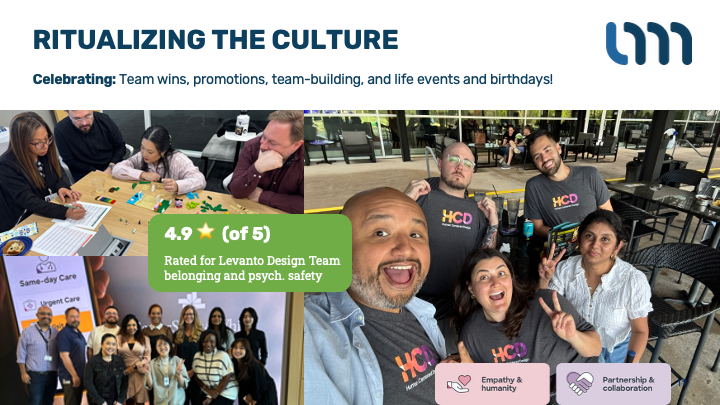
- Team celebrations
- Peer recognition
- Regular coaching conversations
- Space for personal check-ins
The goal was to create a team where people felt comfortable bringing both their expertise and their humanity to work.
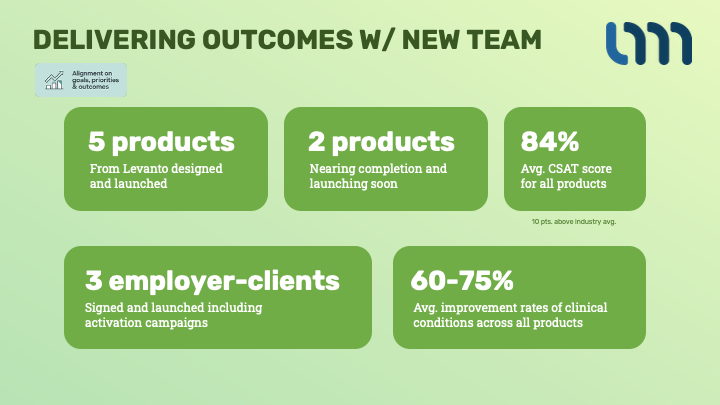
Outcomes
Over time, these efforts helped establish a team culture characterized by:
- Strong trust and psychological safety
- High engagement
- Strong cross-functional partnerships
- Consistently positive feedback from team members
- Sustainable performance during a period of growth
Perhaps most importantly, the team increasingly took ownership of the culture itself—contributing ideas, improving rituals, and helping shape the environment they wanted to be part of.
What I Learned
This experience reinforced a belief I carry into every leadership role:
Building a team is a design problem.
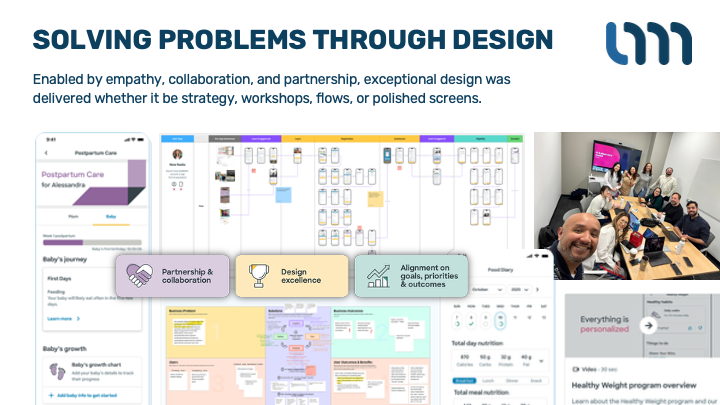
Just as we design products with intention, we can design the systems, experiences, and relationships that shape how teams work together.
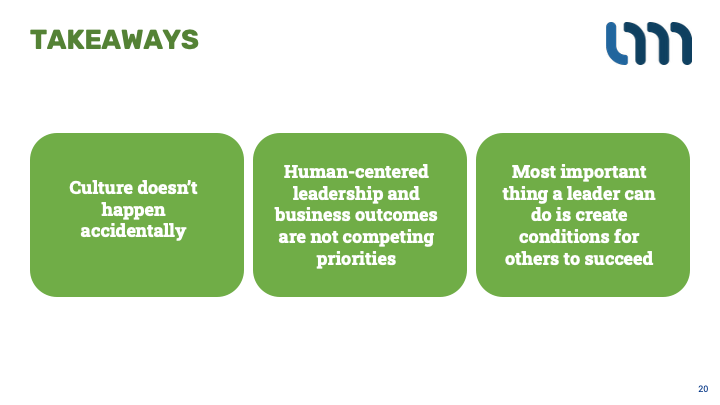
Culture doesn’t happen by accident.
It is built through hundreds of small decisions that signal what matters, who belongs, and how people are expected to show up for one another.